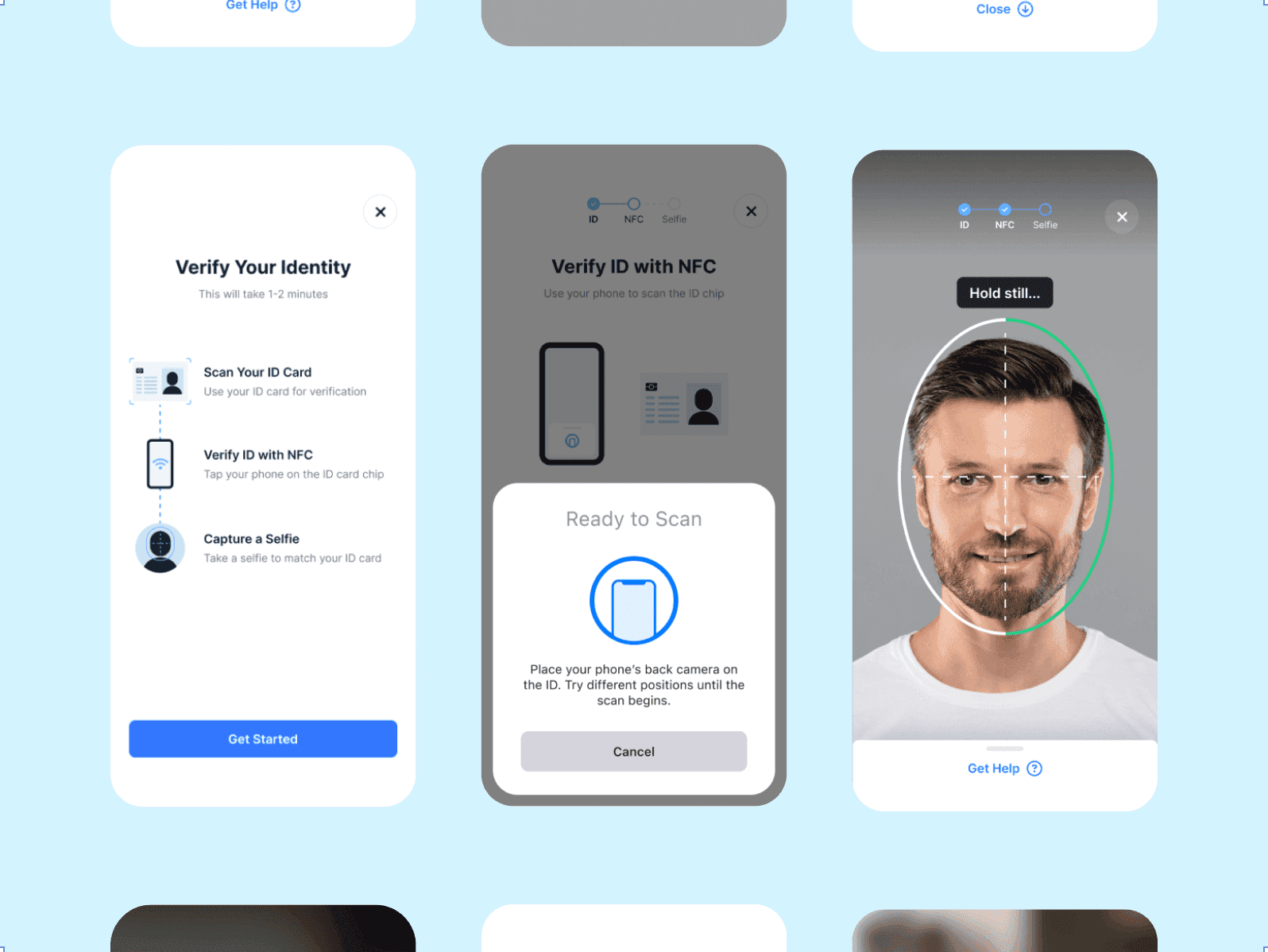
Zuno
Powering home services at scale
Redesigning Zuno’s Engineer App to help 17,000 engineers join the network, stay compliant and complete jobs across heating, solar, electrical and other home services.
Project Overview
Zuno powers the technology and operations behind home-service installations for brands including BOXT, E.ON Next and Tesla.
I primarily led design across the Engineer App, improving how engineers onboard, maintain compliance and complete work, while helping evolve the product into a scalable multi-trade platform.
Status
Shipped
Role
Senior Product Designer
Year
Jun 2025 – Present
Product & Audience
B2B2C Home Services
Skills
Mobile App
Enterprise SaaS
Design Systems
Home Services
Final Solution
I redesigned key parts of the engineer lifecycle around a clearer, reusable platform model.
Highlights
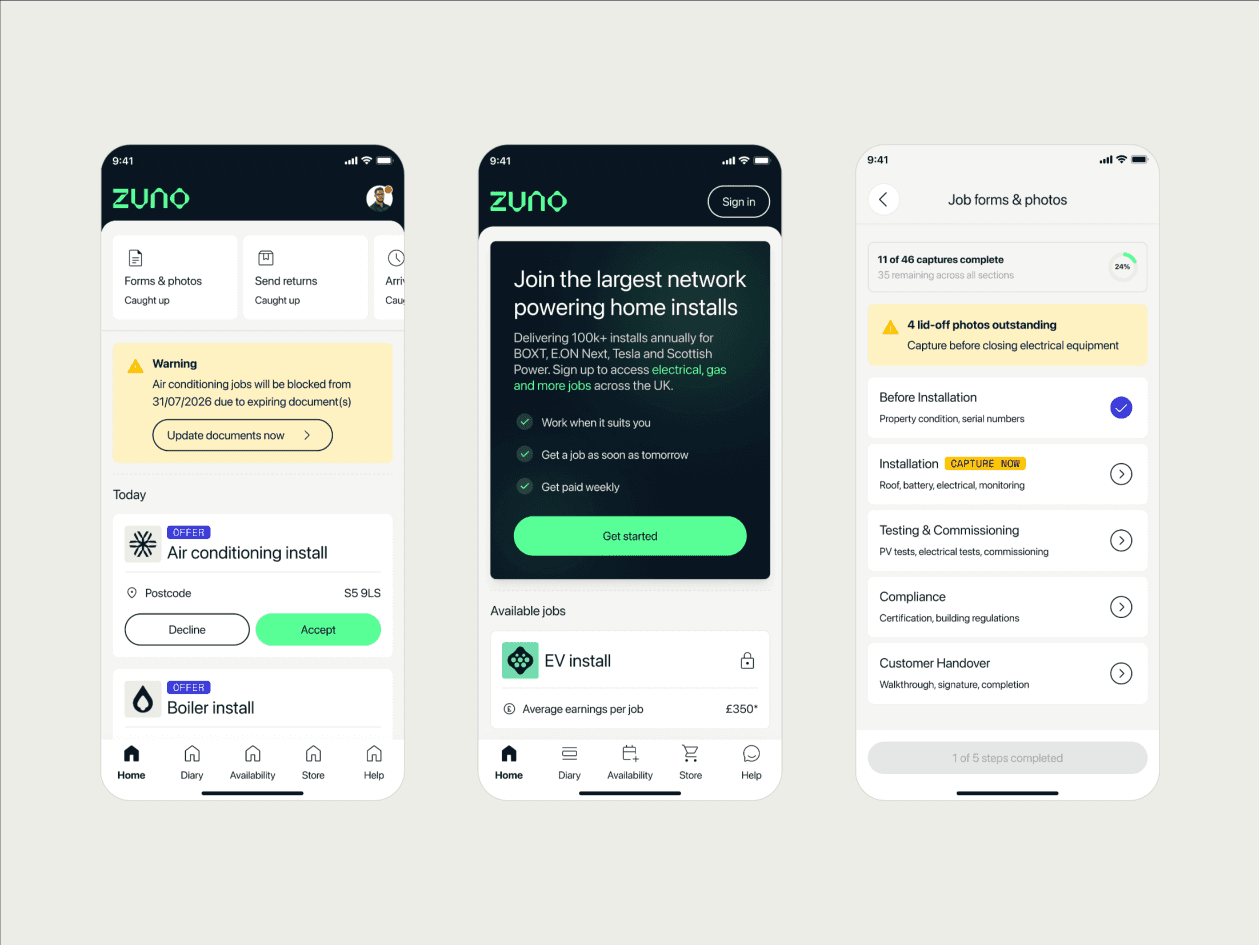
A redesigned engineer app simplifying onboarding, compliance and job completion while evolving into a scalable multi-trade platform.

Understanding the platform
Zuno connects customers, engineers and operations across the home-service lifecycle. The Engineer App is where engineers join the network, manage qualifications, complete jobs and maintain their eligibility for work.

One app, many workflows
The Engineer App had grown around individual services and operational needs. As Zuno expanded into new trades, fragmented onboarding, compliance and job workflows became harder for engineers to navigate and harder for the business to scale.
Fragmented journeys – Onboarding, compliance and jobs behaved like separate experiences
Operational complexity – Different trades introduced different requirements, qualifications and evidence
Platform scale – The product needed to support additional trades and brands without duplicating every experience

My role across the platform
I worked hands-on across discovery, product design and delivery, partnering closely with Product, Engineering, Operations and Compliance to shape both immediate improvements and the longer-term platform direction.
Discovery & strategy
Product & systems design
Delivery & collaboration

Making onboarding easier to complete
Engineer onboarding had high drop-off and incomplete profiles. The challenge was to reduce friction without weakening the qualification and compliance checks required to join the network.
Requirements felt long and difficult to understand
Progress and outstanding actions lacked visibility
Interrupted applications were difficult to resume

Insight
Engineers were not only completing a form. They were deciding whether joining Zuno was worth the time and effort.
The solution
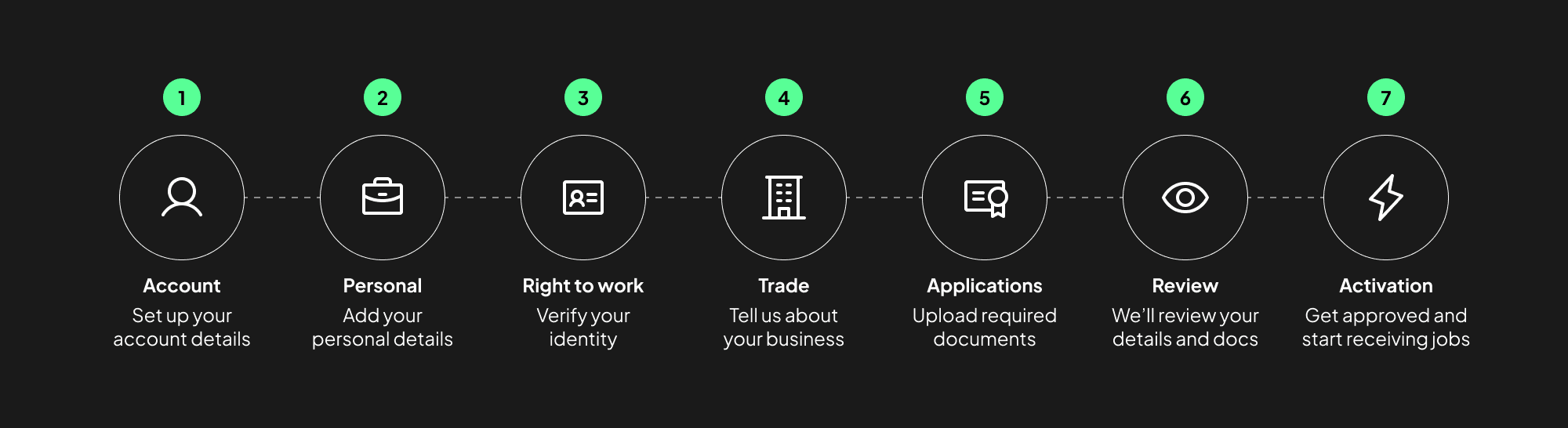
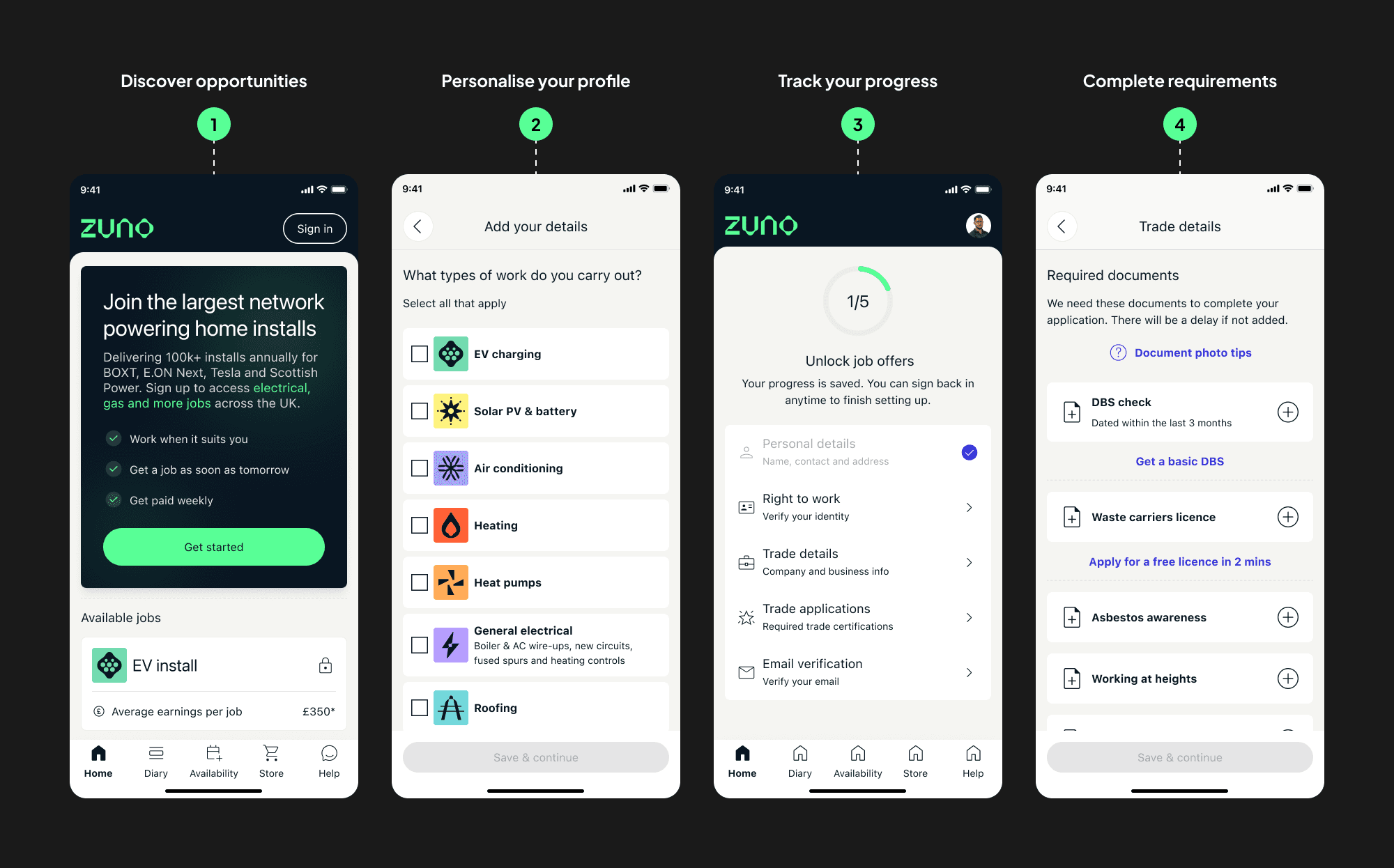
Progressive onboarding – Smaller stages made the application easier to understand and resume
Clear requirements – Engineers could see what was required, why and its current status
Actionable progress – The experience prioritised what needed attention next
Decision and trade-off
Decision
Structure onboarding around reusable stages rather than one continuous application
Trade-off
More structure increased implementation complexity but created a model that could scale across trades
Outcome
22% higher onboarding completion
18% lower engineer churn
27% growth in electrician registrations
Turning compliance into a manageable journey
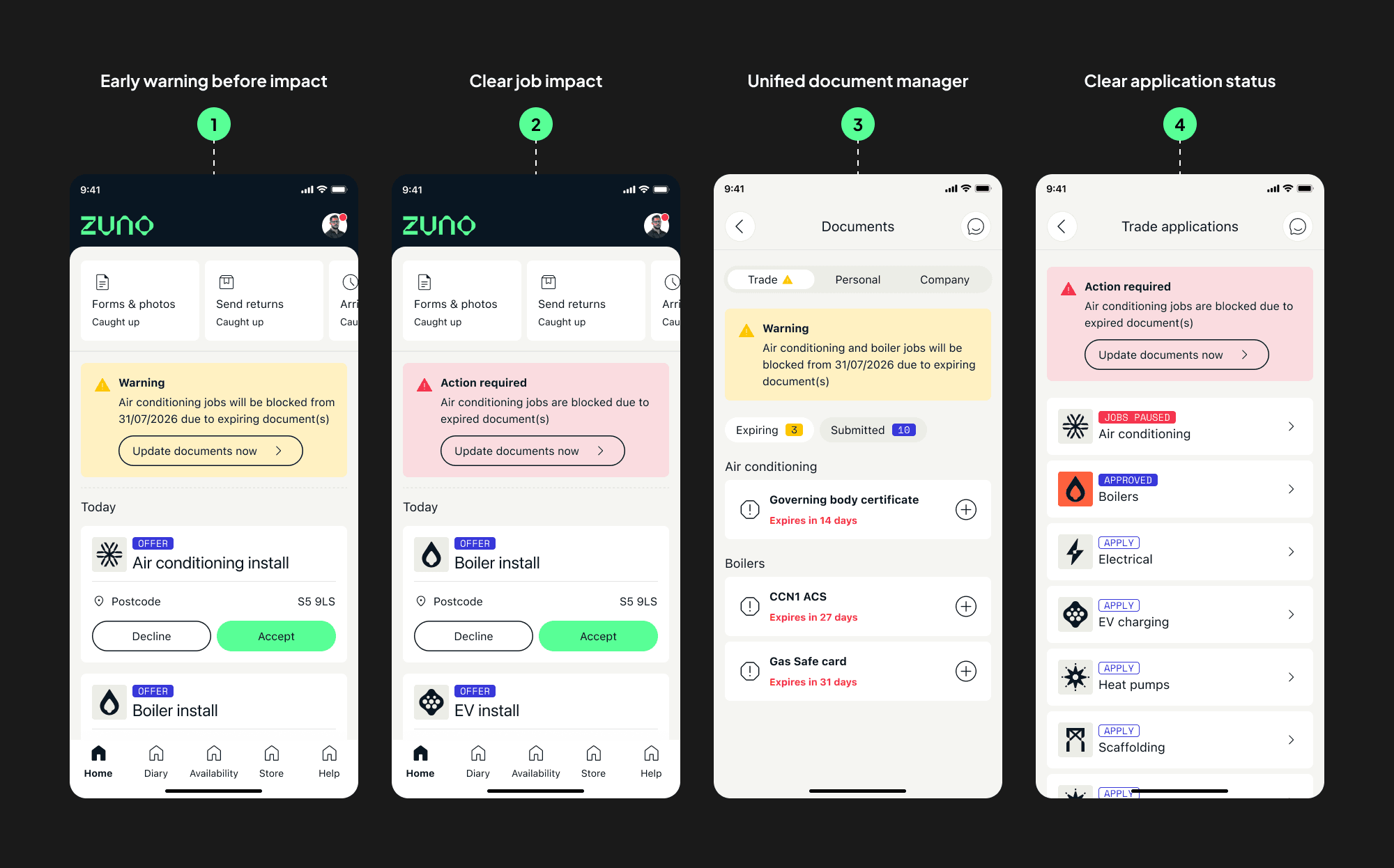
Compliance had been treated largely as document management. I reframed it around a simpler engineer question: “What do I need to do to remain eligible for work?”
The problem
Expiry was reactive rather than preventative
Statuses didn’t clearly communicate who needed to act
Operations relied on manual follow-up

The design model
I moved the experience towards a requirement-based model.
Each requirement could communicate:
Current status
Expiry date
Required action
Submitted evidence

Status system
A shared status model powers every compliance component across the Engineer App.

Solution and trade-off
Solution
I introduced a requirement-based model connecting status, expiry, evidence and next action, using consistent logic across the Engineer App and Admin
Trade-off
Rather than relying on more notifications, I prioritised clearer in-product states so engineers could understand and resolve issues in context.
Outcome
31% lower expired documents
24% fewer support contacts
19% more documents renewed before expiry
The new model gave engineers clearer ownership of their compliance while helping internal teams review submissions more consistently and reducing avoidable support.
Helping engineers complete jobs faster
Job completion involved forms, checks and extensive photographic evidence.
The existing process often expected engineers to complete this administration at the end of a job, even when some evidence needed to be captured before or during installation.
This was not only an upload problem. It was a workflow problem.
Discovery
I shadowed the Solar Audit team to understand how job submissions were reviewed and why engineers were being asked to provide additional evidence.
The most important insight was that evidence requirements were not aligned with the physical sequence of installation work.
Evidence was often requested after the relevant installation stage
Engineers lacked context on what each photo needed to prove
Missing evidence created repeated audit follow-up

Key insight
The problem wasn’t uploading photos. It was asking for the right evidence at the right time.
The design direction
I moved the experience towards a stage-based job workflow that reflected how engineers completed physical work on site.
Prepare – Review requirements before starting
Capture – Collect evidence while relevant parts remain visible
Review – See outstanding forms and photographs before submission
Submit – Complete the job with confidence that required evidence is present

Decision and trade-off
Decision
Align evidence requirements with installation stages instead of presenting one final checklist
Trade-off
More touchpoints during the job could feel intrusive, so each interaction needed to remain lightweight and skippable where appropriate
Expected impact
Expected product and operational impact
Fewer missing photographs
Higher first-time audit approval
Less follow-up with engineers
Faster job administration
Designing a scalable multi-trade platform
As Zuno expanded beyond its original service model, individual workflows were becoming difficult to scale. I helped move the product towards shared terminology, behaviours and components that could support multiple trades, brands and user types.
Shared operational logic
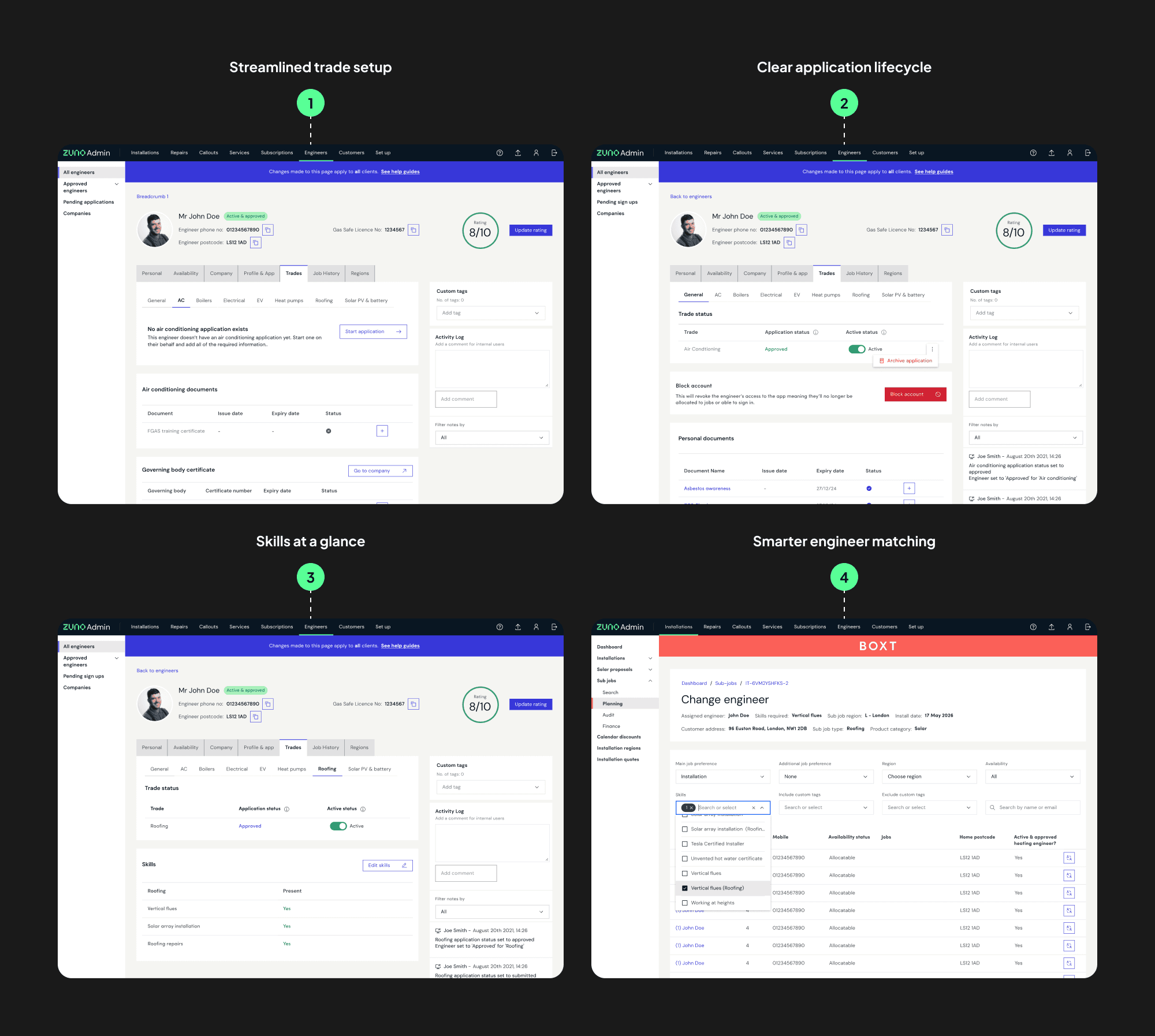
Engineer actions often triggered operational work behind the scenes. I aligned statuses and workflow logic across the Engineer App and Admin while adapting each interface to the needs of its users.
Themeable design foundations
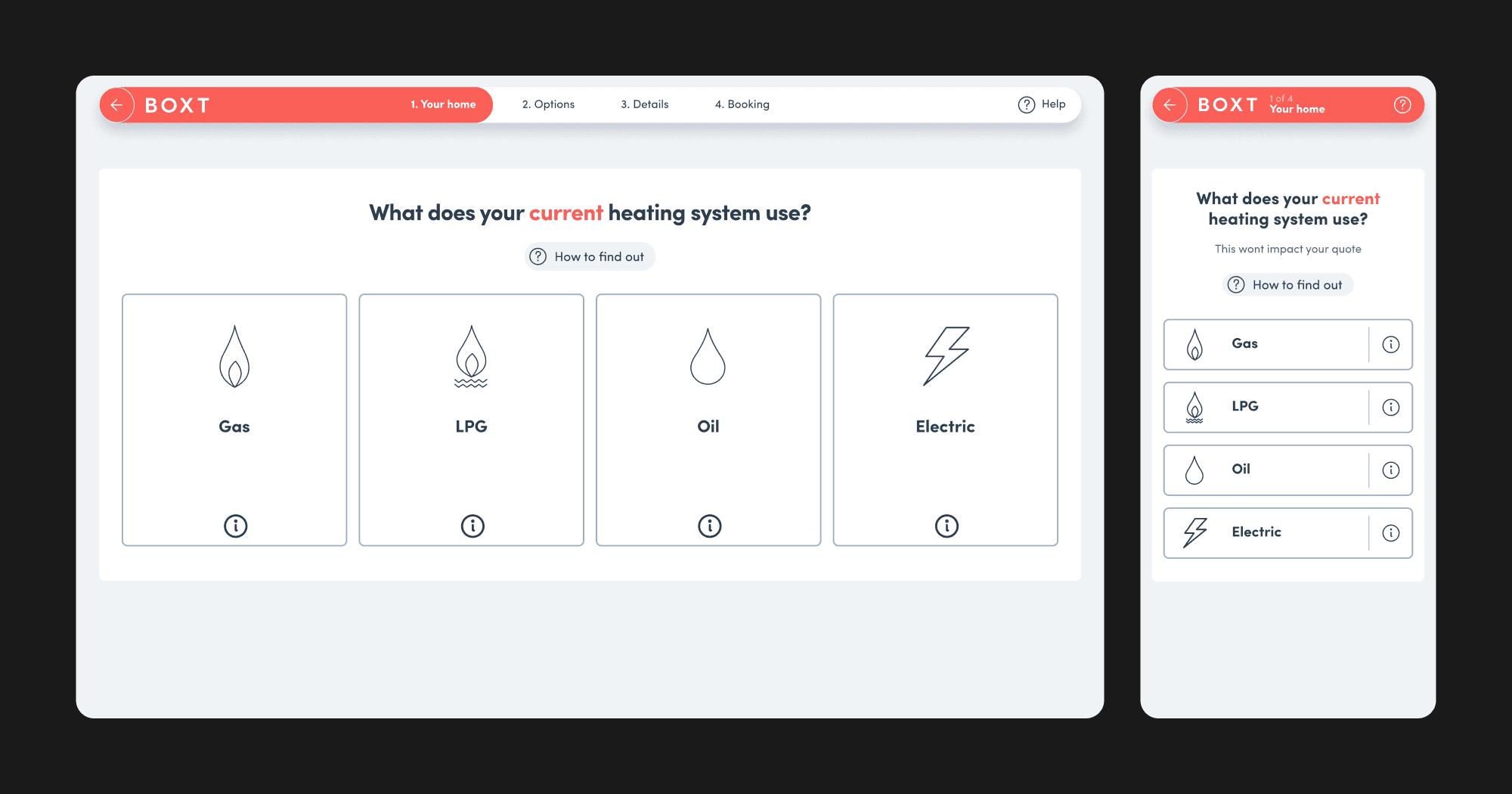
Reusable patterns across onboarding, compliance and job delivery reduced duplication, while a themeable customer design system helped Zuno support enterprise brands without rebuilding the experience for each partner.
Light Mode
Dark Mode




BOXT
E.ON Next

What changed
What I took forward
Design around real work – Field-service software needs to follow the physical workflow, not just the data model
Reduce downstream complexity – Better engineer experiences can remove operational work elsewhere in the system
Build systems carefully – Reusable patterns should emerge from repeated needs, not abstraction alone