Vita Mojo
Scaling Digital Ordering for Hospitality
Designed a seamless ordering experience across web, mobile, and kiosks, enabling brands like Nando’s and Subway to process 100K+ daily orders and generate £1M+ in revenue.

Project Overview
I led the end-to-end design of Vita Mojo’s digital ordering platform, building it from 0 to 1 with a scalable design system that ensured consistency across web, mobile, and kiosks. By crafting intuitive ordering workflows, flexible meal customisations, and an optimised checkout, we created a frictionless experience that improved accessibility, boosted conversion rates, and enabled hospitality brands to scale with ease.
Status
Shipped
Role
Senior Product Designer
Year
Mar 2019 – Nov 2022
Product & Audience
B2B2C Hospitality
Skills
Product Design
Web, Mobile Apps & Kiosks
Design Systems
Final Solution
We successfully streamlined digital ordering with a seamless, scalable, and efficient experience that drove real business impact.
* These results were achieved across LEON, YO! Sushi, Tossed and HOP Vietnamese
Highlights
An end-to-end digital ordering experience, designed to optimise usability, flexibility, and performance across web, mobile, and kiosks.


Understanding the Problem
Vita Mojo started as the UK’s first fully digital and cashless QSR before transitioning into a B2B2C SaaS platform. As they expanded, their existing ordering system lacked the flexibility needed to support multiple brands. Customisation was limited, user experiences were inconsistent, and the absence of a unified design system led to inefficiencies across web, mobile, and kiosks.
I joined as a Product Designer to build Vita Mojo’s digital ordering platform from 0 to 1, ensuring a scalable, adaptable, and intuitive experience that could support a variety of hospitality brands.
Key Challenges
The system was originally built for Vita Mojo’s own restaurants, limiting flexibility for external brands
Inconsistent UX and UI across web, mobile, and kiosks due to the lack of a design system
Ordering friction, particularly in meal customisation and checkout flows
Scalability issues, with no theming capabilities to support different brands


Research & Insights
To inform design decisions, I conducted competitor analysis, user research, and product assessments to identify opportunities for improvement.
Competitor Analysis
I examined leading digital ordering experiences from McDonald’s, Mamago (Wagamama), and KFC, focusing first on self-service kiosks before expanding into online and mobile ordering platforms. This helped uncover industry standards, UX patterns, and gaps where Vita Mojo could differentiate itself.


User Research
Given Vita Mojo’s B2B2C nature, I needed to consider both:
Restaurant operators – Their pain points in menu management, order processing, and brand customisation
End customers – Their expectations for a seamless ordering experience across different devices
I conducted interviews and usability tests with restaurant partners and customers to understand their ordering habits, challenges, and preferences.
Key Insights
We uncovered critical insights from both restaurant operators and end customers that shaped our omnichannel ordering experience across kiosk, web, and mobile.
Restaurant Operators
Reduce counter workload – Operators wanted to lower reliance on front-of-house staff and streamline order-taking during peak hours.
Upsell through UI – Businesses aimed to increase basket value using recommended add-ons and smart combo prompts.
Speed up service – A key goal was to process more orders per minute, especially during lunch rushes in urban locations.
Minimise order errors – Manual entry mistakes were common – digital flows helped ensure order accuracy and consistency.
End Customers
Cut waiting times – Customers often cited long queues as a pain point, particularly during peak lunchtime hours.
Save money – Users appreciated access to kiosk-exclusive offers, meal deals, and multi-buy discounts.
Customise orders easily – Many valued the ability to personalise meals without the pressure of speaking to staff.
Use preferred channel – Customers wanted the flexibility to order ahead or at the counter via kiosk or mobile, depending on context.
Building a Scalable Design System
To address inconsistencies and inefficiencies, I led the development of a modular, scalable design system—the foundation for Vita Mojo’s new digital ordering platform.
Design System Goals
Consistency – Unified UI across web, mobile, and kiosks
Scalability – Adaptable to multiple restaurant brands
Efficiency – Streamlined design-to-development process
Accessibility – WCAG-compliant interfaces for all users
I used atomic design principles, starting from base tokens and components to fully built templates. The system was designed to be fully responsive, accommodating various kiosk sizes and orientations, from iPads to large Elo touchscreens.
To enable brand customisation, I implemented JSON-driven theming, allowing restaurant partners to apply their own colours, fonts, and branding seamlessly.

Wireframing & UX Optimisation
Before diving into visuals, I mapped out the core user flows for kiosk, web, and mobile platforms. Using early feedback and business goals, I focused on simplifying meal customisation, improving checkout clarity, and reducing ordering friction. The wireframes were built using a flexible design system that laid the groundwork for cross-platform consistency.
Mapped key user journeys – From homepage to checkout across all platforms
Reduced ordering friction – Especially in customisations and modifiers
Designed with scale in mind – Flexible layouts that adapt to different brands and screens
Used component-first thinking – Built from tokens, atoms and reusable patterns

Testing & Iteration
We conducted user testing with both restaurant partners and end customers, gathering insights on usability, clarity, and efficiency. I compiled feedback into themes, prioritised fixes, and iterated on core flows — particularly for kiosk customisation, mobile onboarding, and accessibility.
Observed kiosk usage in real environments – Focused on peak-time usability
Tested early flows on mobile and web – With interactive prototypes
Improved navigation and flow clarity – Based on repeated confusion areas
Made accessibility improvements – Adjusted layouts, contrast, and CTA hierarchy
Final Designs & Key Screens
After validating core flows, I created final designs across all ordering channels — applying brand theming, improving structure, and ensuring UI consistency. Each product touchpoint was designed to be intuitive, fast, and scalable for both restaurant partners and end users.
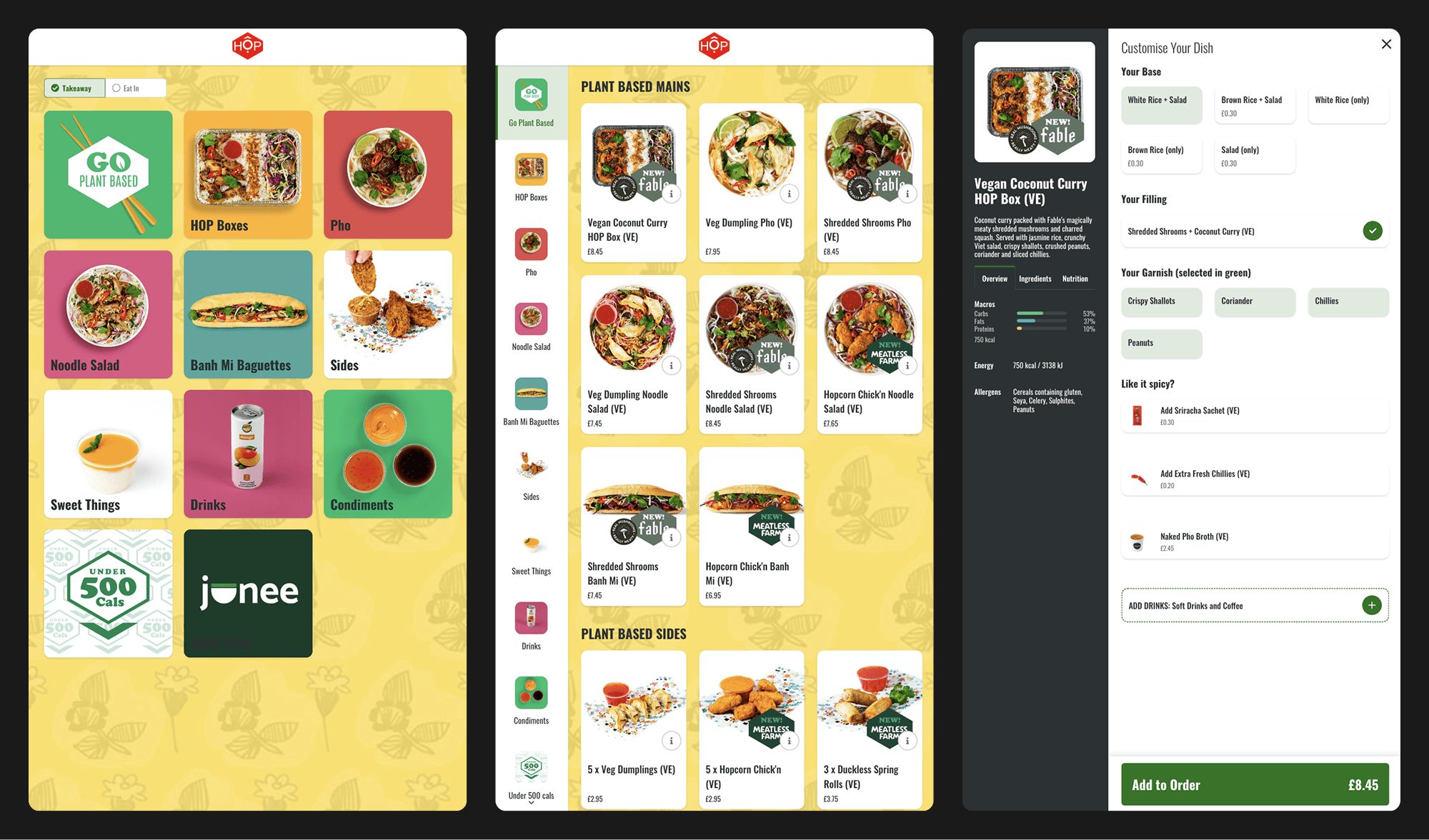
Self-Service Kiosks
Designed for fast-paced environments, kiosk interfaces were optimised with:
Larger touch targets for quick interactions
Streamlined navigation to reduce time spent at kiosks
Clear visual hierarchy for effortless menu browsing



Web Ordering
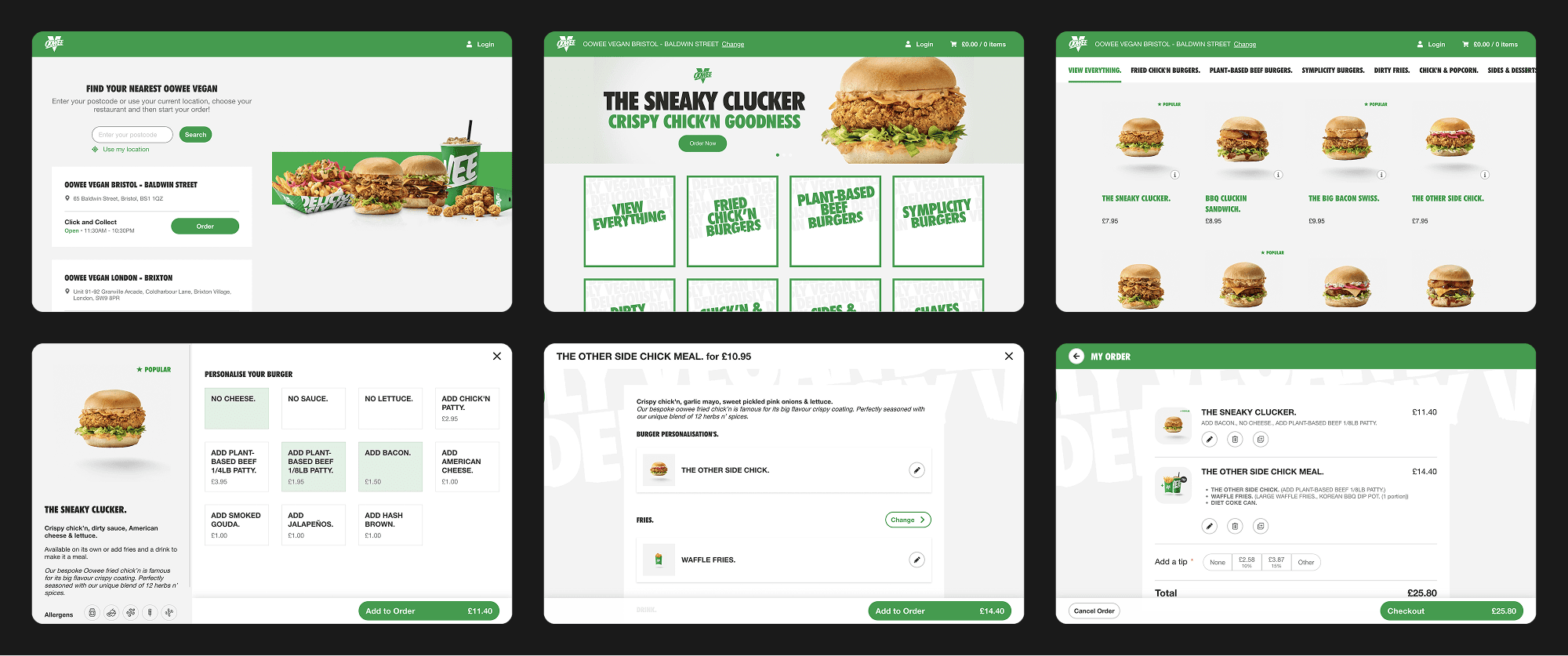
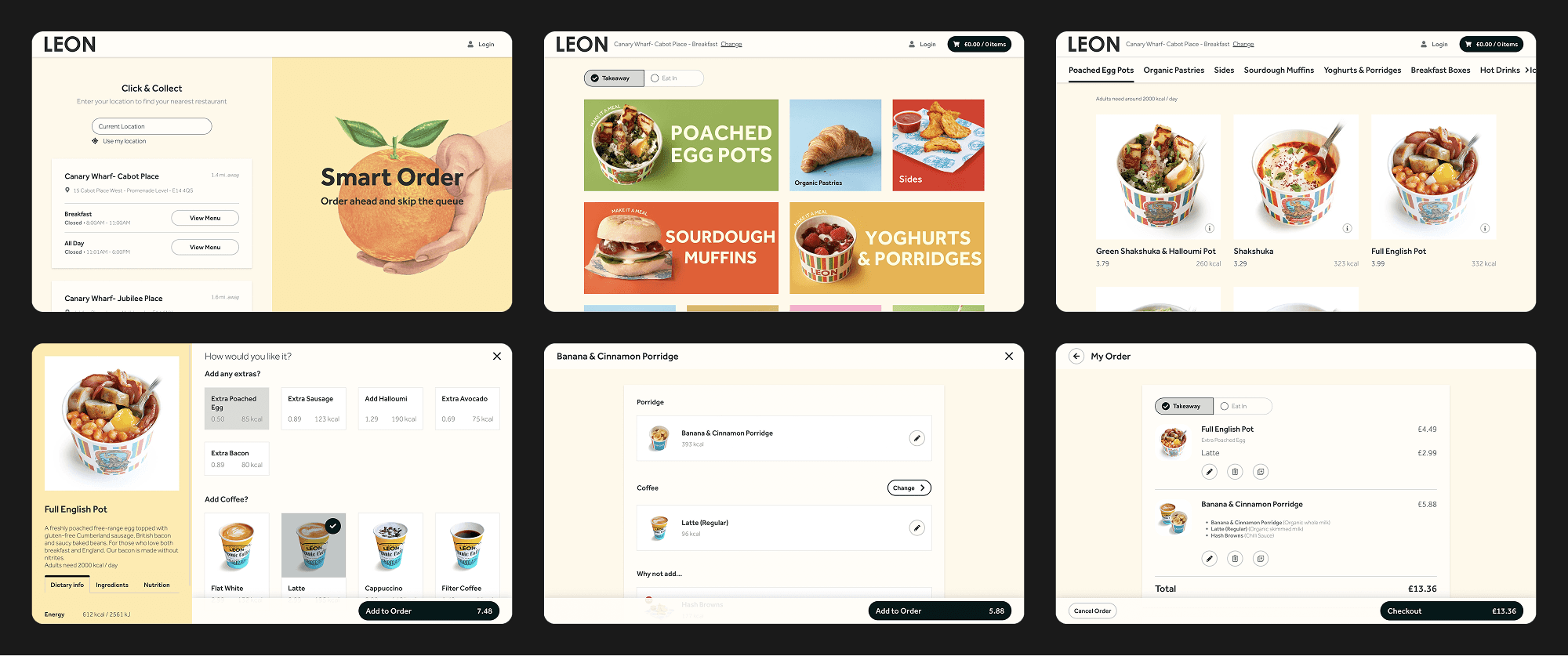
The web ordering experience was designed to be fully responsive, highly customisable, and optimised for conversion. By ensuring a seamless UX across desktop and mobile browsers, we created a flexible solution adaptable to different restaurant brands.
Fully responsive design – Optimised for all screen sizes, from desktops to mobile browsers
Customisable branding – Clients could apply their own logos, colours, and fonts effortlessly
Frictionless checkout – Streamlined order flow to reduce drop-offs and increase conversions


Mobile Apps (iOS & Android)
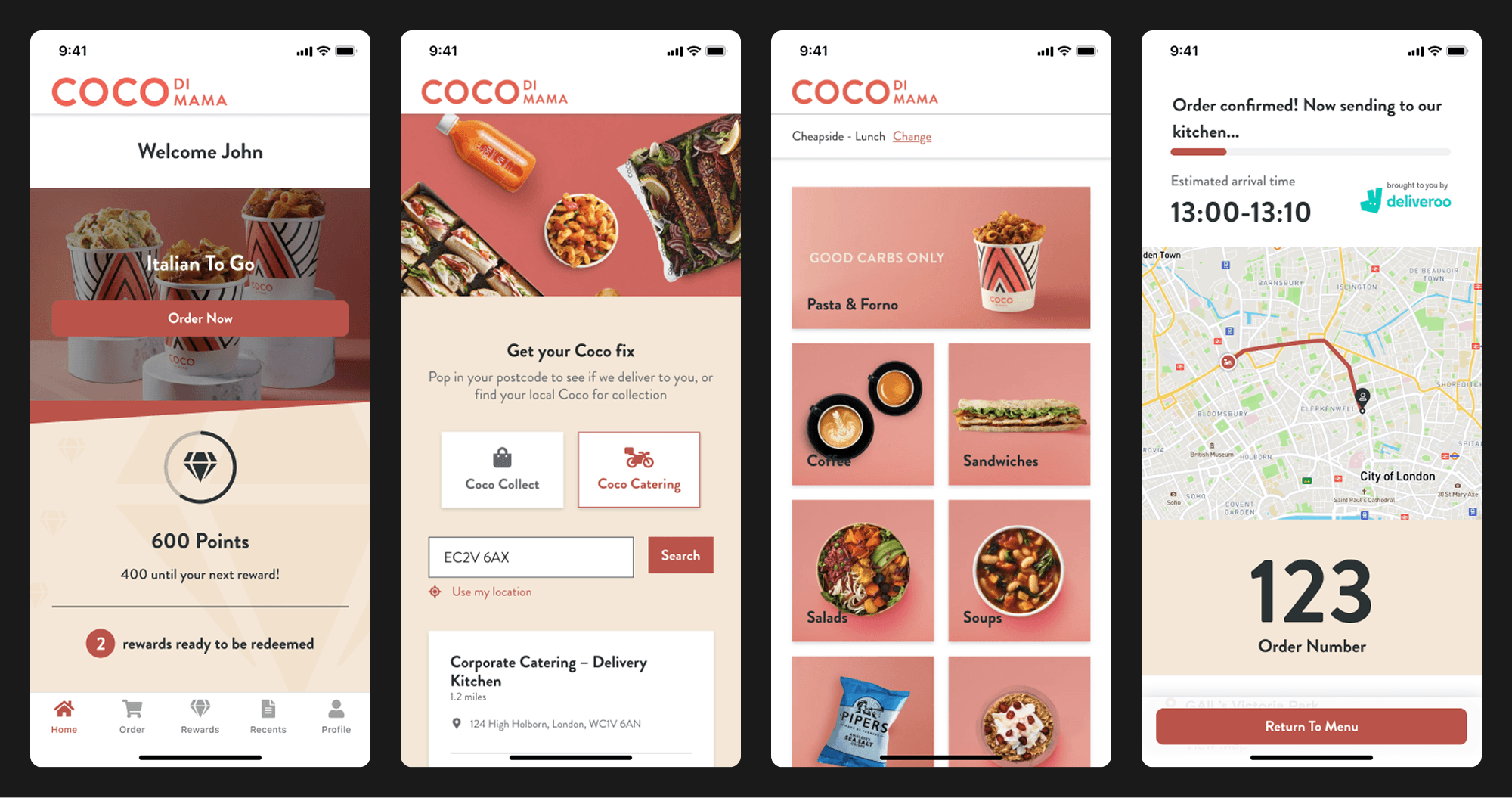
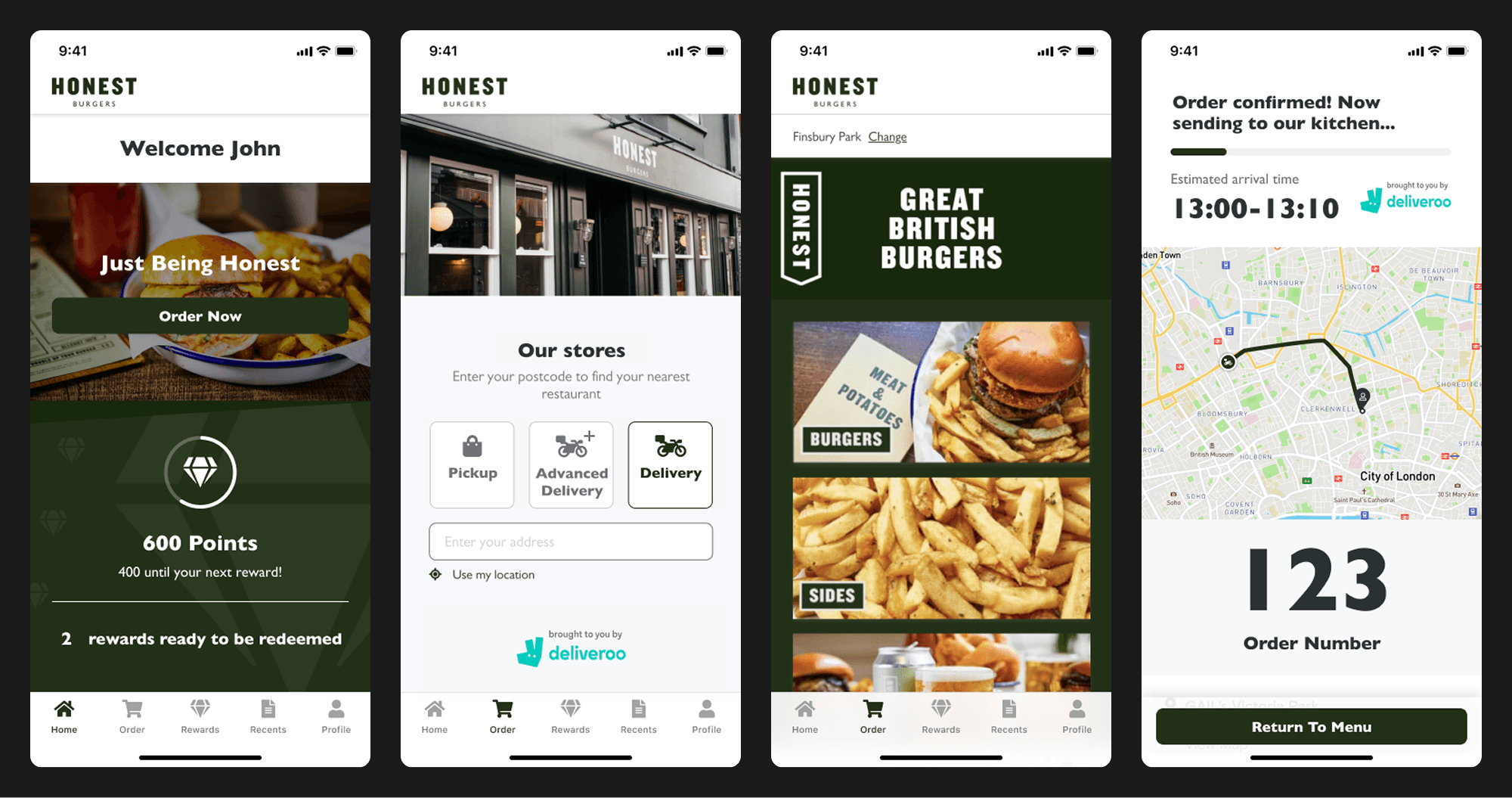
Dedicated iOS and Android apps were developed, introducing mobile-specific features such as:
Onboarding experiences to enhance user retention
Navigation & UI adaptations for smaller screens
Fast checkout experiences for convenience


Streamlining Restaurants Operations
Beyond customer-facing products, I also designed:
Point of Sale system – Efficient order processing for staff
Kitchen Management System – Streamlining order preparation
Menu Management Tools – Enabling dynamic, real-time menu updates

Driving Adoption & Growth
I created comprehensive guides to help restaurant partners maximise their use of Vita Mojo’s digital solutions, increasing adoption and retention.

Showcasing Clients
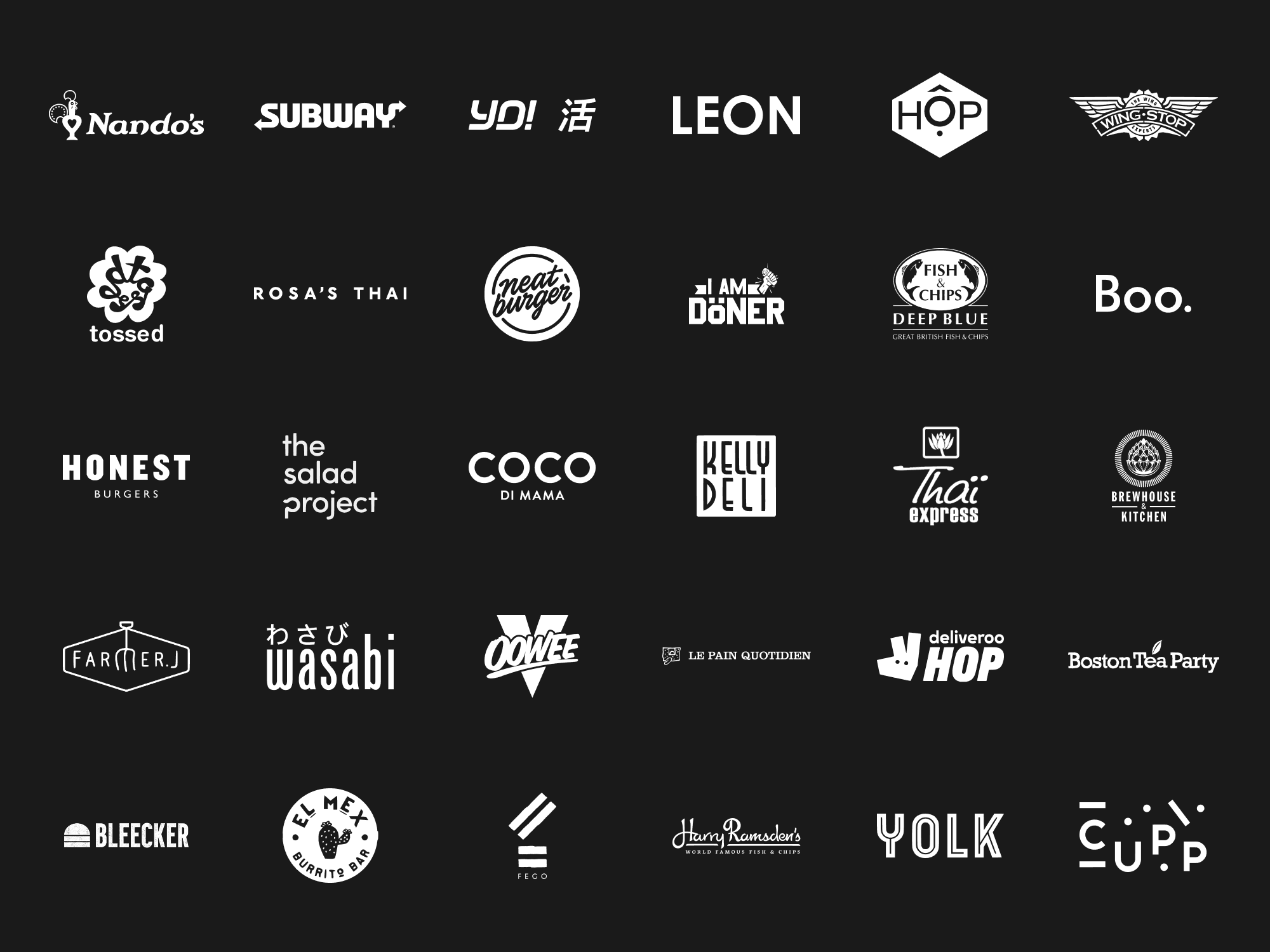
When I joined Vita Mojo, there were zero clients—our platform was built from scratch. After launching our web, mobile, and kiosk ordering solutions, we rapidly scaled, onboarding 150+ hospitality brands.
Trusted by Leading Hospitality Brands
Real-World Product Photos
Designing great digital experiences is only part of the equation—seeing them in action is where the real impact is felt. From self-service kiosks in busy restaurants to mobile ordering on the go, these photos showcase how the Vita Mojo platform is used by customers and staff in real-world environments.


Key Takeaways & Learnings
Scalability is crucial – A flexible design system enabled multiple brands to use the platform without sacrificing UX.
Small UX optimisations drive big impact – Checkout refinements increased conversions and reduced order time.
Cross-functional collaboration is key – Working closely with engineers ensured a smooth design-to-development process.