DeepStream
Modernising Procurement from the Ground Up
Led the design of a new B2B platform that transformed outdated procurement workflows into a streamlined, efficient, and scalable digital experience — from sourcing to supplier management.

Project Overview
I joined DeepStream at its inception, with a mission to build a procurement platform from 0 to 1. Designed for the energy and heavy industries, the product aimed to replace outdated, manual workflows with a modern, user-centred SaaS solution. I led the entire design process, from research and ideation to interface design and front-end implementation. The result was a modular, intuitive platform tailored to both buyers and suppliers, driving clarity, trust, and efficiency across the procurement lifecycle.
Status
Shipped
Role
Lead UI/UX Designer
Year
Sep 2016 – Mar 2019
Product & Audience
B2B Procurement
Skills
Product Design
Front-End Development
Web & Mobile Responsive
Design Systems
Final Solution
We successfully transformed procurement workflows with a streamlined, scalable platform that delivered measurable results for sourcing teams.
Highlights
A from-scratch procurement platform built to improve visibility, compliance, and efficiency across the sourcing and supplier management journey.


Understanding the Problem
The procurement industry—particularly in oil, gas, and energy—relied heavily on outdated tools like Excel, emails, and PDFs. These manual workflows created inefficiencies, a lack of transparency, and compliance risks. DeepStream’s goal was to build a platform that made procurement simple, clear, and trustworthy.
Key Challenges
Most procurement processes relied on manual documents and emails
No centralised system for managing supplier relationships
No existing product or design system in place
Ensuring trust, security, and compliance was essential
Research & Insights
I conducted market and user research to understand how teams were currently managing procurement and where the biggest pain points existed.
Competitor & Market Analysis
I analysed platforms such as Flexport, DueDil, and other energy-industry tools, identifying gaps in usability, speed, and modern workflows.

User Research
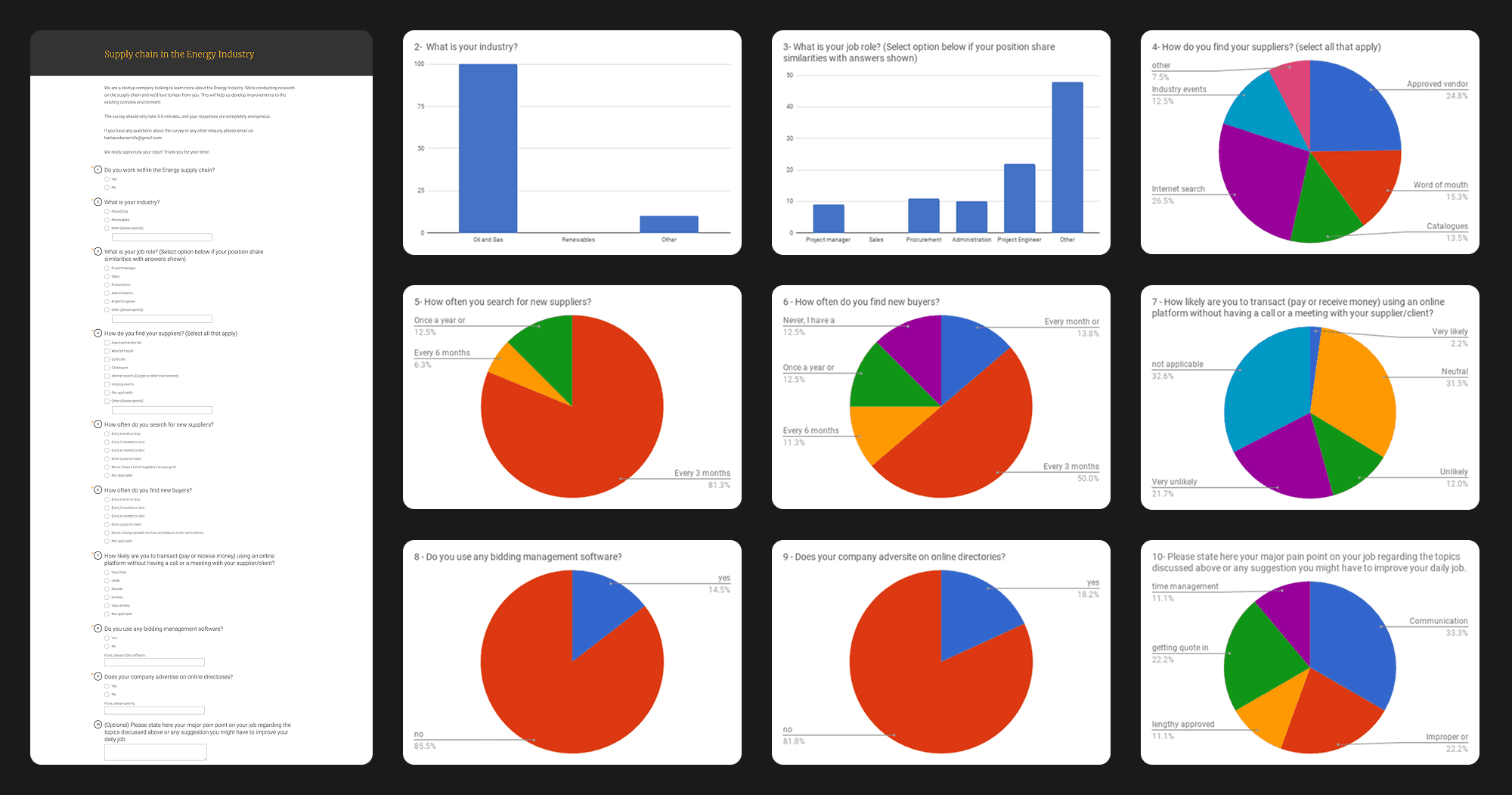
I interviewed both buyers and suppliers, mapped their workflows, and ran surveys that gathered hundreds of data points. This helped define real user needs.
Buyers – Needed better visibility, faster supplier onboarding, and clearer sourcing workflows
Suppliers – Wanted easier access to opportunities, less admin, and transparency
Qualitative Research
I organised focus groups and 1:1 interviews to go deeper into motivations, frustrations, and unmet needs, helping shape both the product vision and user flows.

Defining the Users
To guide product decisions, I created three proto-personas based on our findings:
Buyer – Primary user responsible for sourcing and evaluating suppliers
Supplier – Responds to bids, provides documentation
Dual Role – Some users performed both buying and supplying, so the platform needed flexibility

Ideation & Product Direction
Following research, I worked with the founders and engineers to align on the MVP scope, roadmap, and product values.
Clear workflows for sourcing and supplier evaluation
Modular features to support rapid development
Simplicity, digestibility, and trust as core product values
I created user stories, mapped edge cases, and led team workshops to ensure clarity on every user path.

Wireframes & Early Prototypes
I explored multiple layout directions through low-fidelity wireframes to identify which flows best supported real-world use cases.
These were tested with user groups to validate whether:
Navigation was intuitive
Tasks were easily discoverable
Information architecture felt clear and digestible

User Testing & Iteration
I built low-fidelity prototypes to run usability tests with our focus group users, gathering feedback on layout, terminology, and task completion.
Feedback was organised into themes:
Positives
Negatives
Suggestions
Points of confusion
This process helped guide the next design iterations ahead of MVP launch.

Core Design Values
The platform was designed around three guiding principles:
Simplicity – Reduce clutter, guide the user
Digestibility – Break down complex information
Trust – Design for transparency and professionalism
Final Designs & Key Screens
With a validated design direction, I created a modern yet grounded interface, using colour, layout, and typography to convey clarity and security.
I also:
Built the HTML/CSS front-end architecture
Applied designs across marketing site, dynamic dashboards, and internal tools
Created a style guide and component library for future scaling

Dashboard Overview
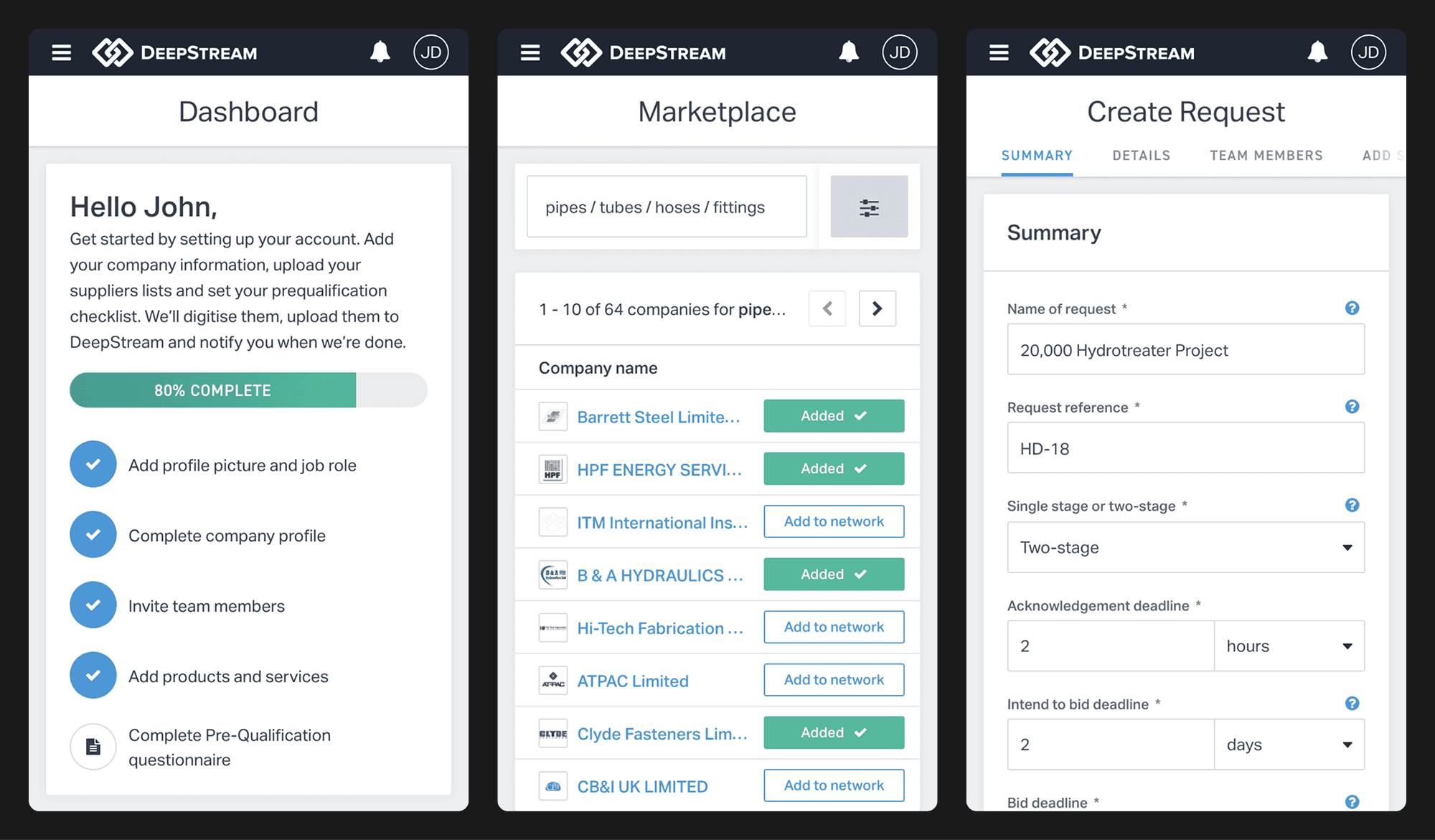
Once onboarded, users land on a dashboard offering a full overview of their activity: sourcing requests, supplier responses, compliance checks, and more.
Everything is segmented into clean, intuitive modules for transparency and control.

DeepStream Network
The platform includes a built-in marketplace where buyers and suppliers connect. Users can:
Save preferred suppliers
Share bid requests
Build their own supplier lists
This feature replaced manual sourcing via spreadsheets and searches, enabling faster, smarter procurement.

Core Features
These screens showcase the key workflows that make up the DeepStream procurement platform. Each feature was designed to simplify complex tasks while maintaining flexibility and control for both buyers and suppliers.
Create Request – Initiate sourcing with structured, step-by-step input fields
Manage Requests – Track progress, view bids, and collaborate internally
Pre-Qualification – Evaluate suppliers quickly based on predefined criteria
Profiles – Access detailed supplier information, history, and documentation



Responsive Design
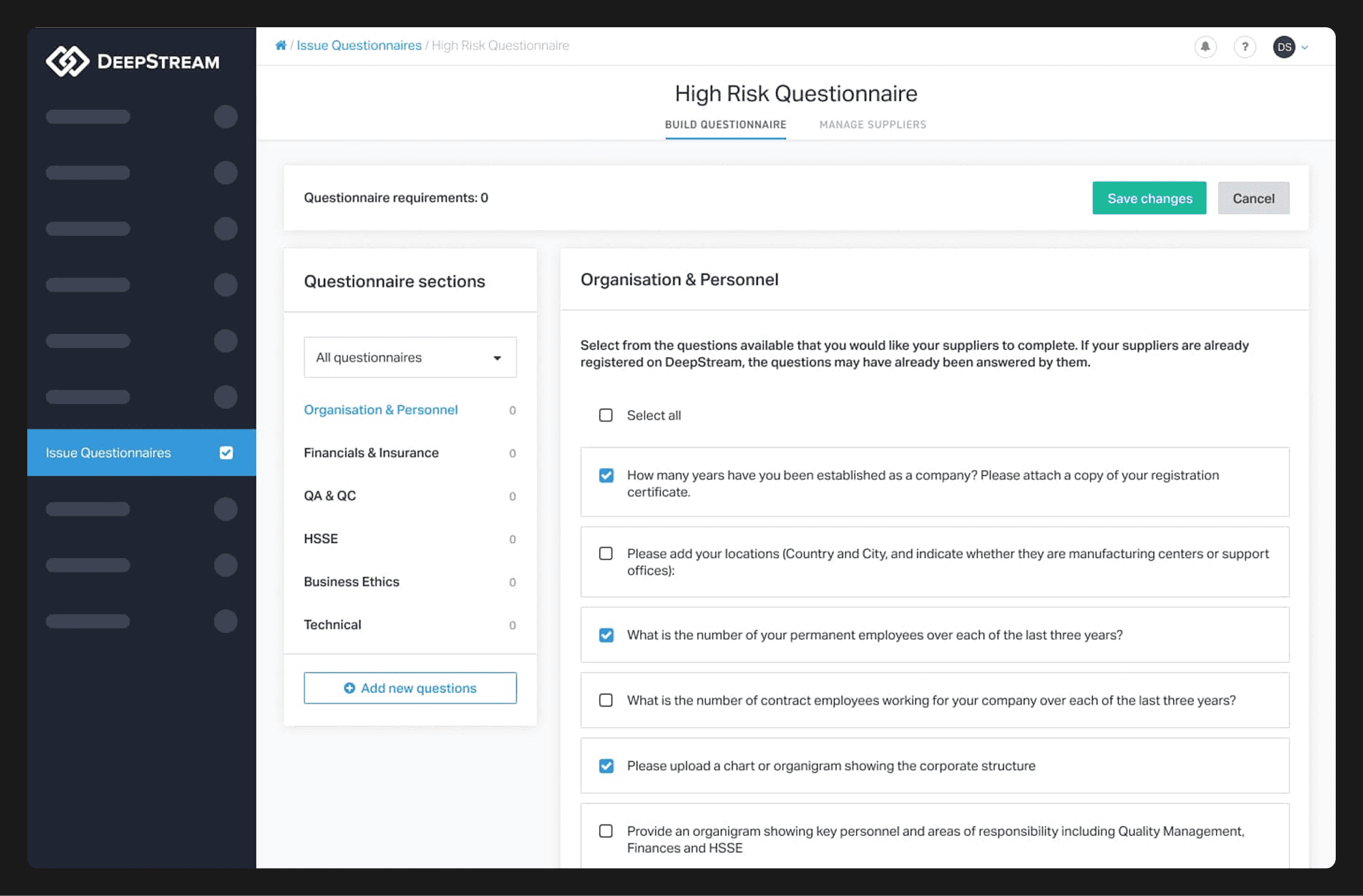
Given that users often accessed DeepStream from email notifications, I designed the platform to be fully responsive. The mobile experience maintained all core functionality while adapting to smaller screens — no feature was compromised.
Key Takeaways & Learnings
Empathy is everything – DeepStream was built with a strong understanding of user needs, pain points, and habits.
Designing from scratch gives you leverage – We weren’t fixing broken parts; we were creating the right ones from the start.
Scaling thoughtfully matters – Modular design and a flexible system made the product adaptable as the company grew.